
Need help? Contact us:
Menu
CATEGORIES
- Cigarette lighter socket adapter
- Wireless Android Auto adapter
- Apple adapter
- Battery adapter
- Car Bluetooth adapter
- Wireless CarPlay adapter
- SD card adapter
- SIM card adapter
- DisplayPort to HDMI adapter
- DVI to HDMI adapter
- Ethernet adapter
- Wii HD adapter
- HDMI adapter
- USB-C to HDMI adapter
- HDMI to jack adapter
- HDMI to VGA adapter
- Wireless charging adapter
- iPhone adapter
- Audio jack adapter
- iPhone jack adapter
- Jack to Lightning adapter
- Jack to USB adapter
- Lightning to USB-C adapter
- Mac HDMI adapter
- MacBook Air adapter
- Micro SD adapter
- OTG adapter
- SCART to HDMI adapter
- EU to UK Adapter
- Canada plug adapter
- France to USA plug adapter
- Ireland plug adapter
- Swiss plug adapter
- USA plug adapter
- RCA to HDMI adapter
- Power adapter
- Adaptateur SSD USB
- Universal adapter
- Universal travel adapter
- USB adapter
- USB-A to HDMI adapter
- USB Bluetooth adapter
- USB-C adapter
- USB-C to jack adapter
- USB-C to USB-A adapter
- USB Ethernet adapter
- USB-C to DisplayPort adapter
- Adaptateur USB-C magnétique
- USB-C to VGA adapter
- 4K HDMI cable
- USB 3.0 hub
- USB-C hub
- USB SD card reader
- HDMI switch and splitter
- All adapters
Bidirectional DVI to HDMI Cable, DVI-D 24+1
Brand:
33,90 €
Shipping costs are calculated at checkout.
Buy more, save more: the discount is applied automatically in the cart!
Buy 2 items get 5% OFF
on each productBuy 3 items get 10% OFF
on each product
Estimated delivery: 6 days
SKU :
N/A
Categories: DVI to HDMI adapter
Any questions?
Feel free to contact us
Guaranteed safe and secure checkout
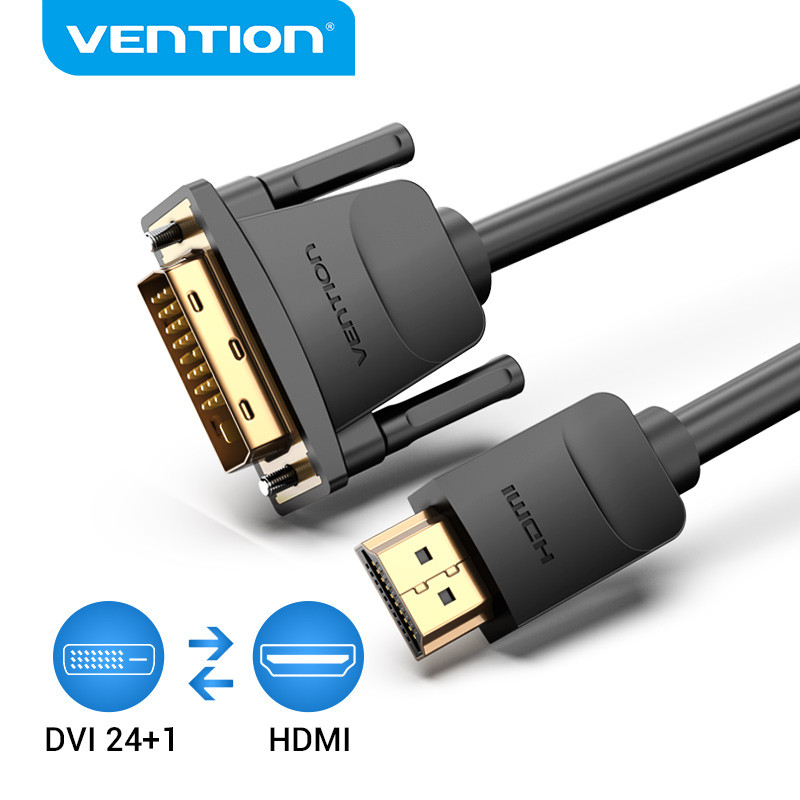
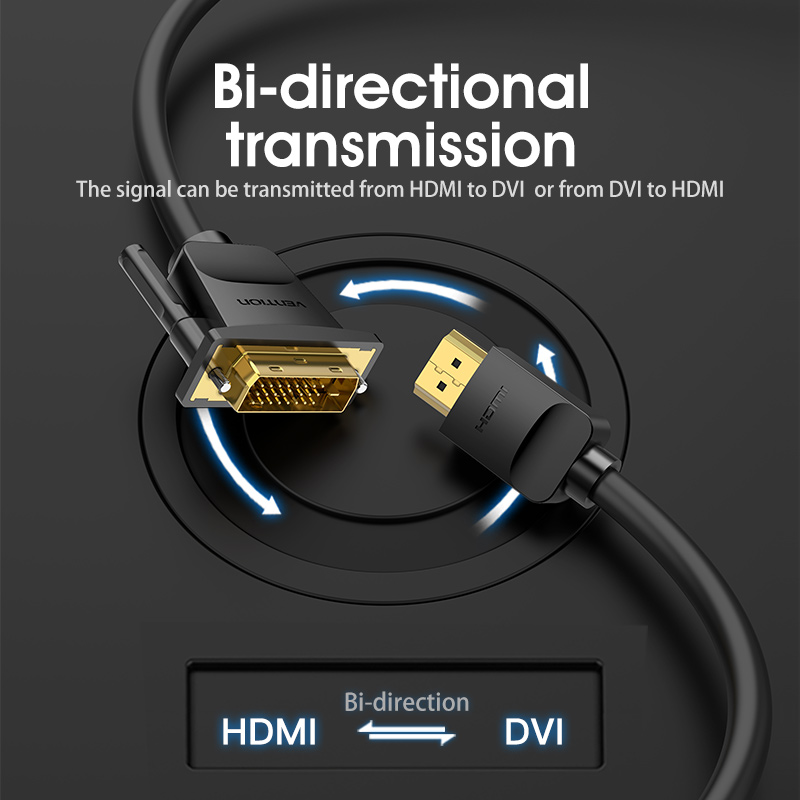
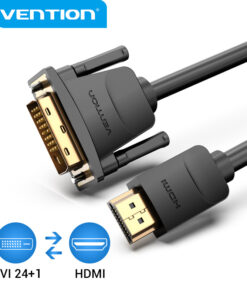
A desktop monitor often has a DVI socket when the computer only has HDMI left. This DVI to HDMI adapter is a bidirectional cable with a DVI-D 24+1 connector.
DVI-D and HDMI carry the same signal
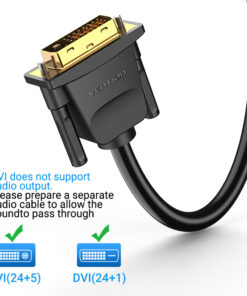
Both standards share the same digital video signal. That is why the link works with a simple cable, without conversion electronics and with no loss of picture. DVI simply does not carry sound.
24+1, what the figure means
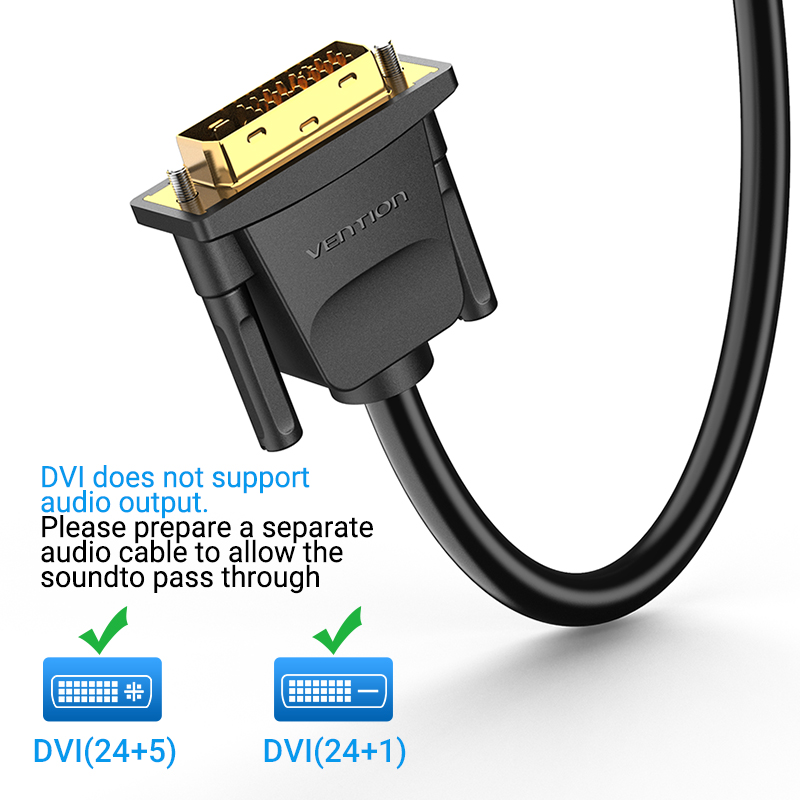
It describes the connector pin layout. DVI-D 24+1 is the purely digital version, the most common on monitors and graphics cards. Not to be confused with DVI-I, which has four extra pins.
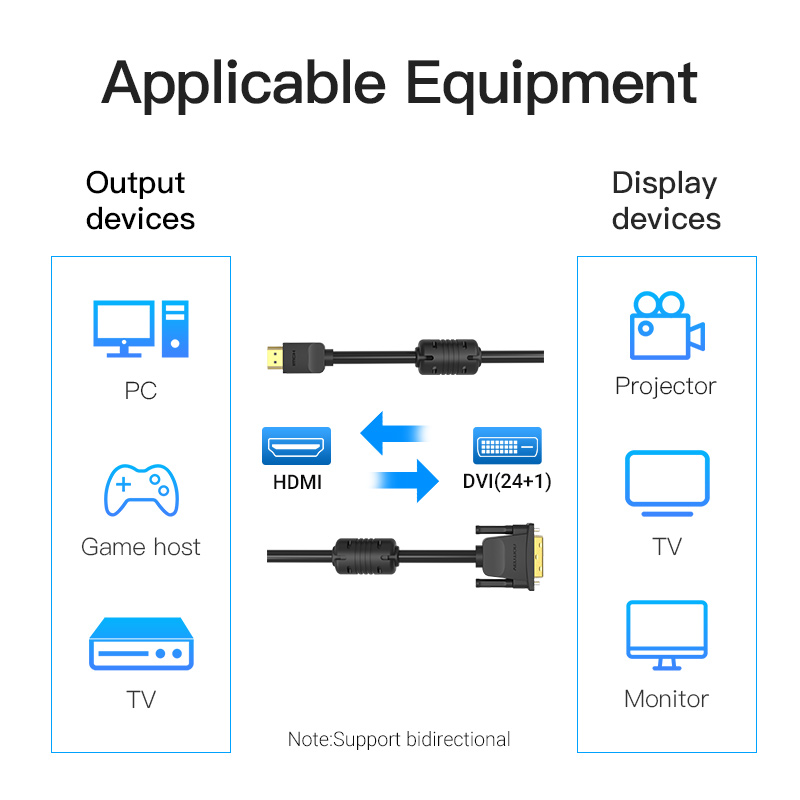
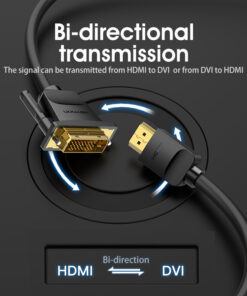
Bidirectional, so usable both ways
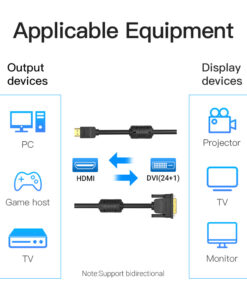
The cable links an HDMI output to a DVI input, or the other way round. No need to buy again for a different setup, and the same cable can be reused when the equipment changes.
No sound, and that is normal
DVI has no audio channel. If your monitor has speakers, you will need a separate audio link. It is not a fault of the cable but a feature of the standard.
How to recognise a DVI socket
A DVI socket is white, wide and has locking screws. It differs from VGA, blue and trapezoidal, and from HDMI, flat and without screws. A glance at the back of the monitor avoids a useless order.
What you receive
- HDMI to DVI-D cable, 24+1 connector
- Bidirectional link
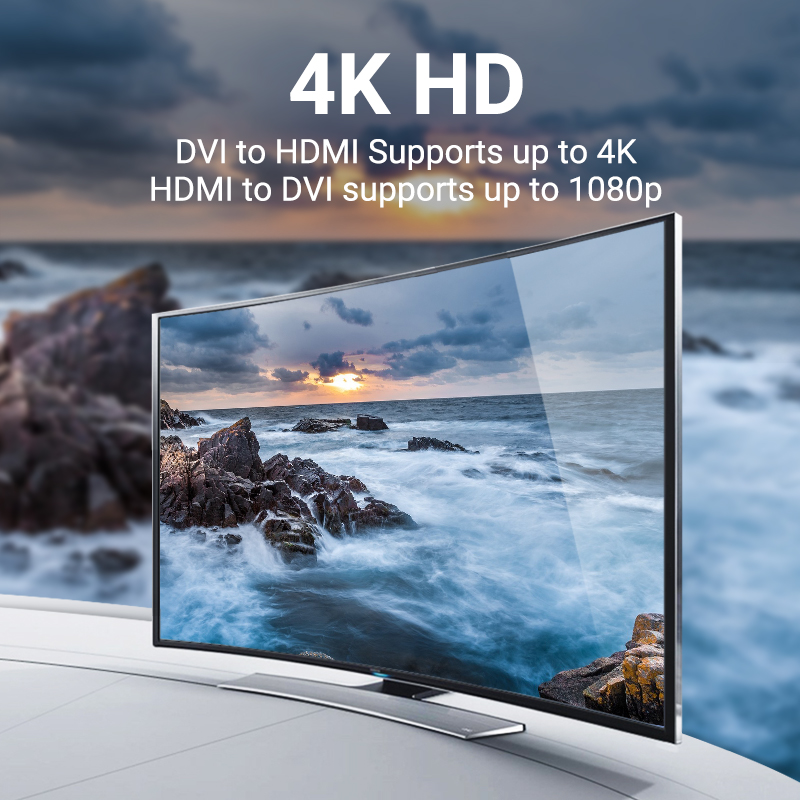
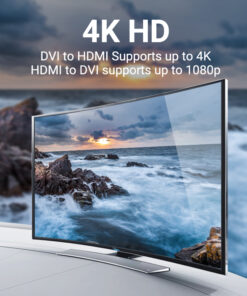
- Transmission up to 1080p
- No power supply needed
- Lengths: 0.5, 1, 1.5, 2, 3 or 5 m
Frequently asked questions
Does sound come through?
No, the DVI standard carries no audio. Plan a separate audio link.
Does it suit a DVI-I socket?
A DVI-D connector fits into a DVI-I socket. The reverse is not true.
Is there any loss of quality?
No. The signal stays digital from end to end.
Be the first to review “Bidirectional DVI to HDMI Cable, DVI-D 24+1” Cancel reply
 Bidirectional DVI to HDMI Cabl...
33,90 €
Select options
FAQ
What are the delivery times?
We take great care in processing your order and making our products. Orders are usually dispatched within 1 to 3 working days, then delivery takes between 5 and 9 working days, with an average of 8 days for mainland France.
For international deliveries, these times may be slightly longer. We are committed to shortening them while maintaining the quality of our products, so that you receive your order quickly. Every effort is made to optimise this process.
How can I track my order?
As soon as your items are dispatched, you will receive a confirmation email with a link to follow your order directly on the carrier’s tracking page.
Can I change my delivery address?
If you would like to change your delivery details after placing your order, please contact us as soon as possible. Once the order has been dispatched, details such as the delivery address can no longer be changed.
Can I have my order delivered to several different addresses?
At the moment we can only process one delivery address per order. If you would like to send items to several addresses, please place a separate order for each delivery address.
Which payment methods do you accept?
Mon Adaptateur offers several secure payment methods for your online purchases:
- Bank card: Visa, Mastercard, American Express
- Apple Pay
- Google Pay
Payment is processed by our banking provider. We do not accept PayPal or bank transfers.
To complete your order, make sure the billing address you enter matches the details linked to your payment method. If your payment is declined, we recommend contacting your bank to resolve the issue.
How long does a refund take?
Items returned by post to our warehouse are processed within 14 working days of receipt. Once your return has been approved, you will receive a confirmation by email. Refunds are made using the payment method used for the purchase. Please note that additional charges for Saturday delivery are not refundable.
When will I be charged for my purchase?
For most products (excluding made-to-measure and personalised items), no amount is charged before your order is dispatched. After you place your order, a payment authorisation for the full amount is made and your order is prepared for dispatch. The final amount is only charged when the order is dispatched.
Made-to-order and personalised items must be paid in full as soon as the order is confirmed. Once Mon Adaptateur receives it, our customer service will contact you to confirm the details of your order and process the payment.
Can I cancel or change my order?
To cancel or change an order, please contact us through the contact form as soon as possible. We will do our best to meet your request, but we cannot guarantee that the change can be made once the order has been confirmed. After the payment has been confirmed, the order can no longer be cancelled or changed; however, you can return the item in line with the Mon Adaptateur online returns policy.
Orders for made-to-order or personalised items cannot be cancelled or changed once placed. These sales are final, and these items cannot be returned.
My order was declined, do I need to place a new order?
If you have received a notification saying that your order has been cancelled, please place a new order online or contact us for further assistance.
How many days do I have to return an item?
You can make returns or exchanges within 14 days of the delivery date. To do so, send your items with a carrier to the address that will be given to you by email. This address must appear on the return label. Please note that return shipping costs are paid by the customer.
How do I return an item?
For any further information, feel free to contact our customer service. You can write to us at the following email address:
How long does a refund take?
Items returned by post to our warehouse are processed within 14 working days of receipt. A confirmation email will be sent to you once the return has been approved. Refunds are made using the original payment method. Please note that additional charges for Saturday deliveries are not refundable.
You may add any content here from XStore Control Panel->Sales booster->Request a quote->Ask a question notification
At sem a enim eu vulputate nullam convallis Iaculis vitae odio faucibus adipiscing urna.
5
4 reviews for Bidirectional DVI to HDMI Cable, DVI-D 24+1
There are no reviews yet.